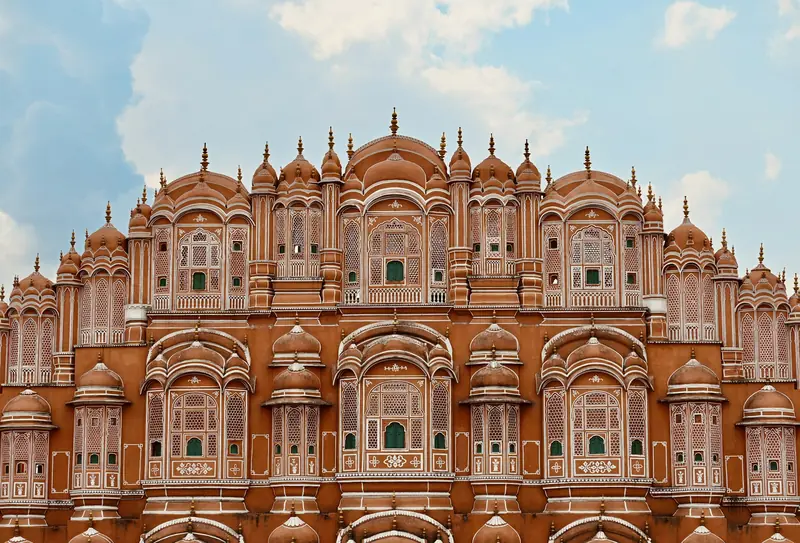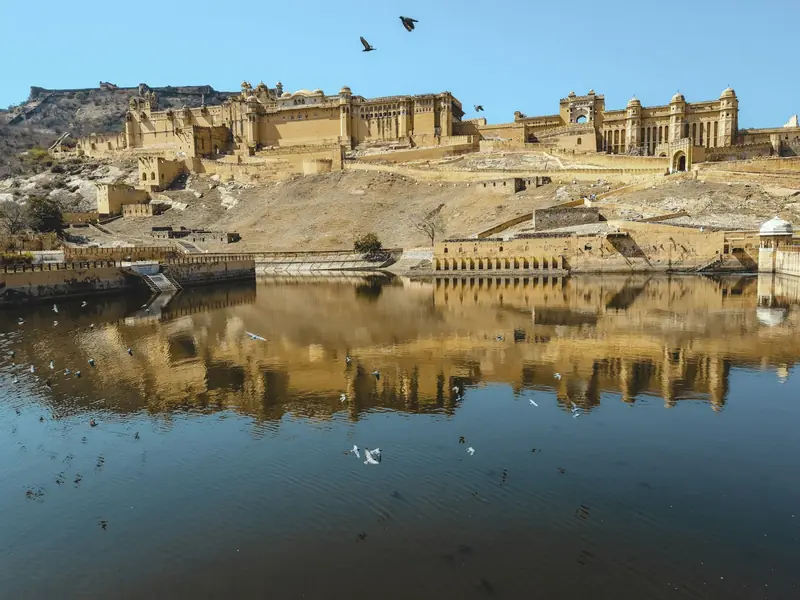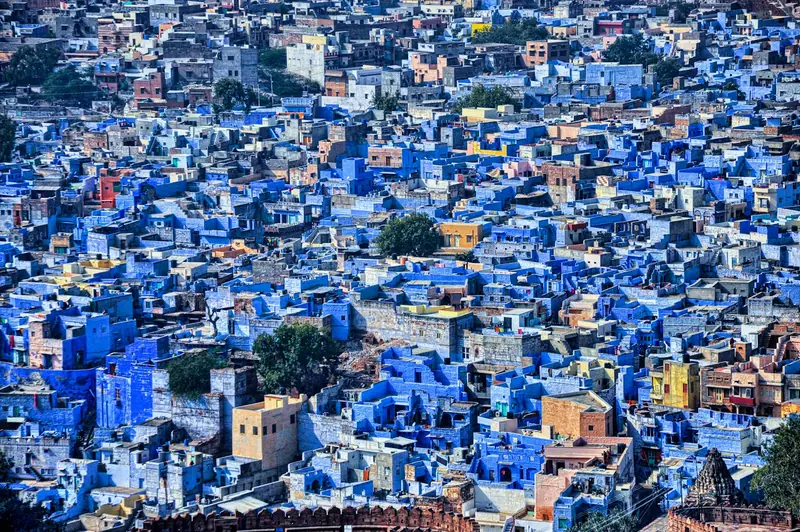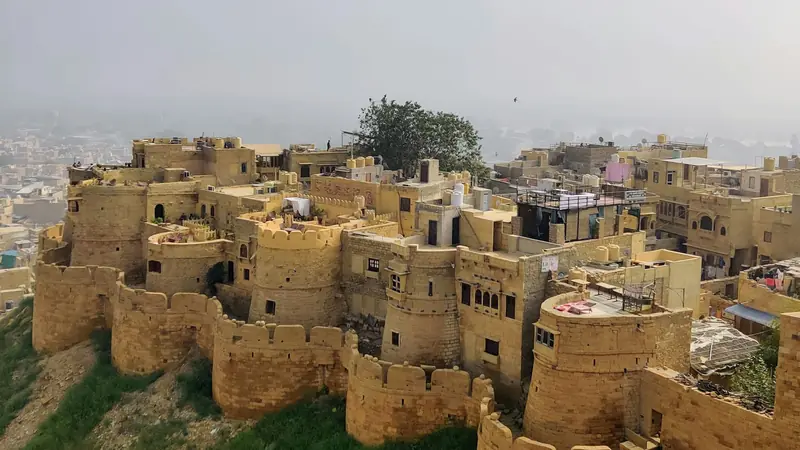
Rajasthan's history is written in stone. The Rajput clans that ruled its kingdoms built forts on every defensible hill, palaces within them, and temples, tanks and cenotaphs around them. Merchants added mansions; villages dug stepwells to survive the dry months. Knowing what to look for makes every stop richer.
Hill forts
Six of Rajasthan's hill forts — Amber, Chittorgarh, Kumbhalgarh, Ranthambore, Gagron and Jaisalmer — are together listed as a UNESCO World Heritage Site. Chittorgarh is among the largest forts in India; Kumbhalgarh's walls snake for kilometres over the hills; Jaisalmer is a living fort with homes, shops and temples still inside. Mehrangarh in Jodhpur, not part of the listing, is perhaps the most dramatic of all.
Palaces
Inside the forts and in the later capitals, palaces blend Rajput and Mughal styles: courtyards, carved balconies called jharokhas, mirrored rooms and painted ceilings. The City Palaces of Jaipur and Udaipur and the palace rooms of Mehrangarh are the finest to visit.
Havelis
Havelis are the courtyard mansions of merchant families. In the Shekhawati towns, such as Mandawa, their walls are covered in frescoes showing gods, legends and, from the late 19th century, trains, cars and European figures. In Jaisalmer, the Patwon-ki-Haveli is famous for its intricately carved yellow sandstone.
Stepwells
In a land of scarce water, stepwells (baoris) were built to reach the water table and provide a cool place to gather. Chand Baori in Abhaneri, between Agra and Jaipur, is one of the deepest and most photogenic, with thousands of steps in geometric flights.
Temples
The Jain temples of Ranakpur and the Dilwara temples at Mount Abu are celebrated for their marble carving. Within Jaisalmer Fort there is a group of Jain temples, and Pushkar has one of the few temples dedicated to Brahma.
Staying in heritage
Many forts, palaces and havelis are now hotels, from grand palace hotels to family-run havelis with a handful of rooms. Staying in one is the best way to experience Rajasthan's architecture after the day visitors have gone. Tell us if you would like heritage hotels on your trip.
Check before you travel
Rules, fees and timetables change. These official sources have the latest information: