Jaipur travel guide

The Pink City: a planned 18th-century capital among Rajput hill forts.

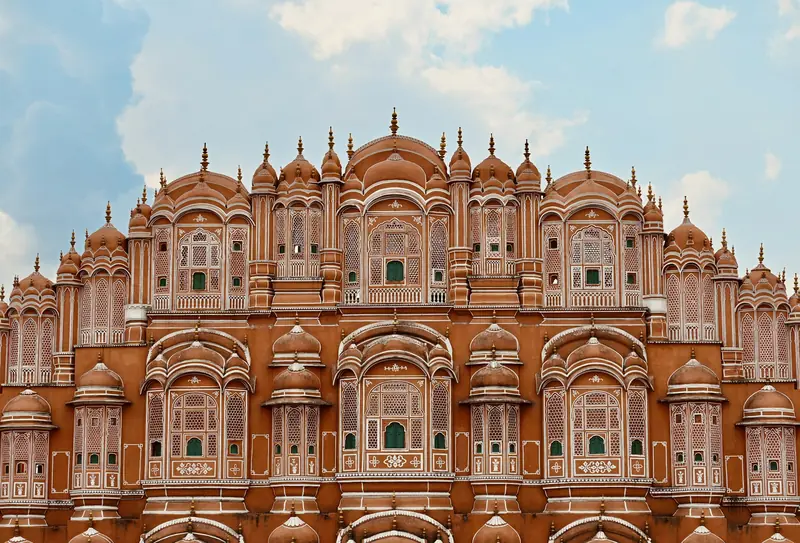
The pink sandstone facade of Hawa Mahal in Jaipur against blue sky and clouds

Jaipur was founded in 1727 by Maharaja Sawai Jai Singh II, a ruler with a passion for astronomy and town planning. His walled city is laid out on a grid of broad streets and bazaars, and was painted its famous terracotta pink in 1876 to welcome the Prince of Wales. The walled city is now a UNESCO World Heritage Site.

Above the city, the Aravalli hills are crowned with forts, including Amber, the former capital of the Kachhwaha rulers.

Why visit Jaipur

Jaipur combines spectacular monuments with some of India's best shopping: block-printed textiles, gemstones, silver, carpets and blue pottery. It is the third corner of the Golden Triangle and the natural gateway to the rest of Rajasthan.

What to see in Jaipur

  • Amber Fort

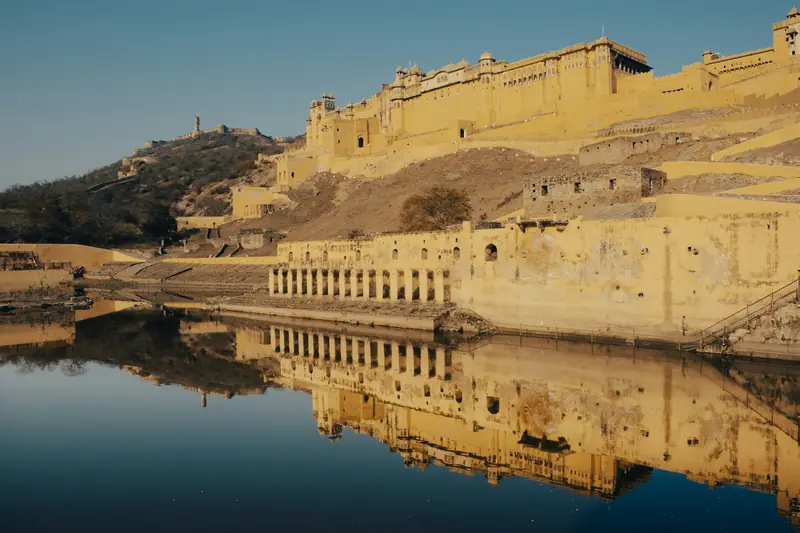
    A hilltop palace of pale sandstone and marble, begun in 1592 by Raja Man Singh, with the mirrored Sheesh Mahal and views over Maota Lake.

  • City Palace

    The palace of the former royal family, part of which is still their home, with museums of costumes, arms and paintings.

  • Hawa Mahal

    The Palace of Winds, a five-storey screen of small windows built in 1799 so royal women could watch street life unseen.

  • Jantar Mantar

    Jai Singh's observatory of giant masonry instruments, including the largest stone sundial in the world. A UNESCO World Heritage Site.

  • Jal Mahal

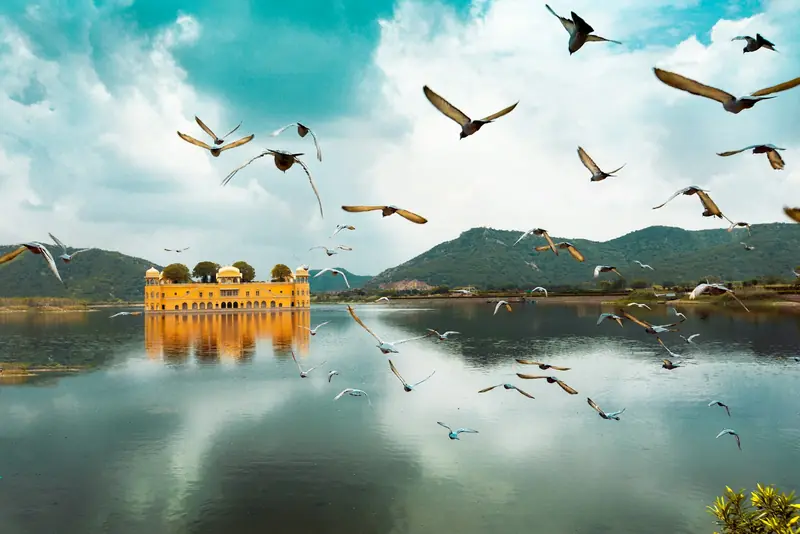
    A palace that appears to float in Man Sagar Lake, seen from the road to Amber.

  • Nahargarh and Jaigarh forts

    Hill forts above the city with wide views, best visited in the late afternoon.

  • The bazaars

    Johari Bazaar for jewellery, Bapu Bazaar for textiles and shoes, and Tripolia Bazaar for brass and lac bangles.

Planning your visit

How long to stay

One full day covers Amber Fort and the main sights of the old city. Two days let you add the hill forts, the museums and a shopping or cooking experience.

Best time to visit

October to March has warm, dry days. Summer, from April to June, is extremely hot. The monsoon, from July to September, brings some rain but also green hills.

Getting there

Jaipur is about 280 km from Delhi (5–6 hours by road) and 240 km from Agra (4½–5 hours). Jaipur International Airport has domestic flights across India and some international routes.

Travel tips

  • Visit Amber Fort early in the morning before the heat and the crowds.
  • A composite ticket covers several Jaipur monuments over two days and usually saves money if you visit more than two of them.
  • Bargaining is normal in the bazaars; fixed-price government emporiums are an alternative if you prefer not to haggle.
  • For views of Hawa Mahal's facade, try the rooftop cafés opposite, which are best in the morning light.

Opening hours, fees and seasonal conditions change. We confirm current details when we plan your trip.

Questions about Jaipur

Why is Jaipur called the Pink City?

The old city was painted pink, a traditional colour of hospitality, for the visit of the Prince of Wales in 1876. Buildings in the walled city are still required to keep the colour.

Should we ride an elephant at Amber Fort?

Many travellers now prefer to walk up or take a jeep. If you want to meet elephants, consider a visit to Hathi Gaon, the elephant village near Amer.

Tours that include Jaipur

Private itineraries you can take as they are or change to suit you.

Plan your trip

Plan your visit to Jaipur

Tell us when you plan to travel, which places you want to explore, and what kind of experience you are looking for.

Plan My Trip