Jaisalmer travel guide

A golden sandstone fort rising out of the Thar Desert.

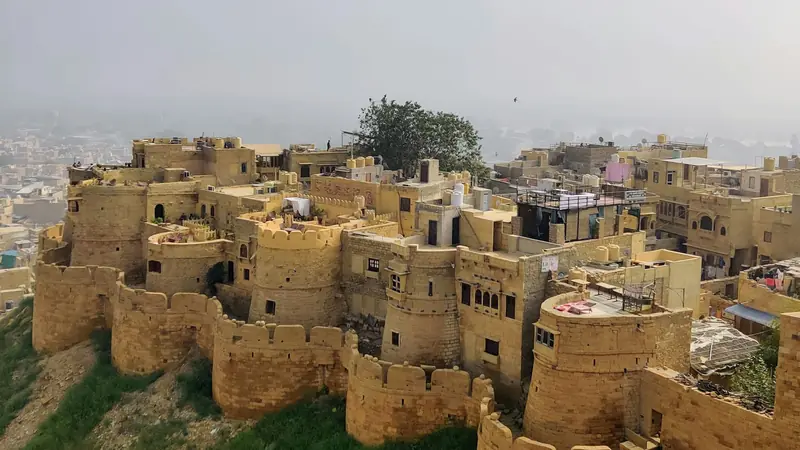
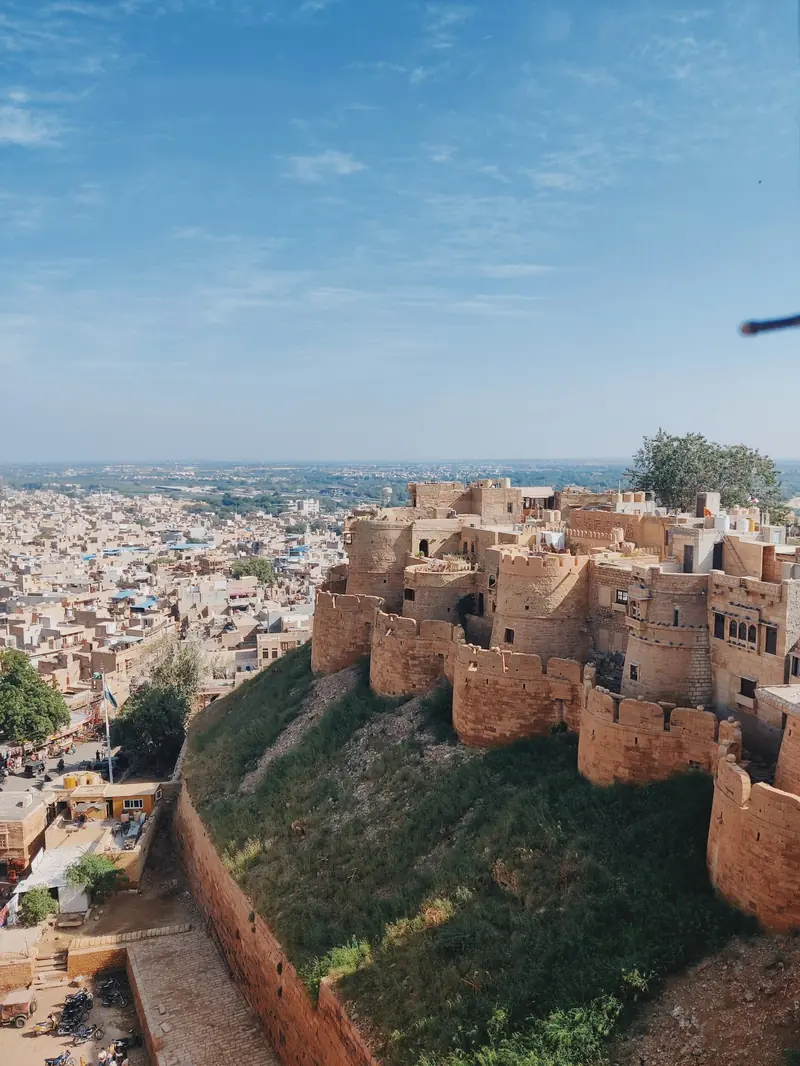
The golden sandstone walls of Jaisalmer Fort above the town

Jaisalmer is known for its fort: a ring of yellow sandstone bastions on a low hill, built from 1156 by the Bhati Rajput ruler Rawal Jaisal. Unlike most Indian forts, it is still lived in. Houses, shops, Jain temples and small hotels fill the lanes inside the walls, which is why it is often called a living fort.

The town grew rich on the camel caravans that crossed the Thar Desert between India and Central Asia. Its merchants spent that wealth on havelis carved so finely that the stone looks like lace. Today Jaisalmer is the best base in India for a night among the sand dunes.

Why visit Jaisalmer

Travellers come for three things that are hard to find together anywhere else: a fort you can wander through like a village, some of the finest carved sandstone in Rajasthan, and the open desert an hour's drive away. It suits people who like to explore on foot, photographers, and anyone who wants a quieter, slower part of Rajasthan after the busier cities.

Jaisalmer Fort is one of the six Hill Forts of Rajasthan listed together as a UNESCO World Heritage Site.
What to see in Jaisalmer

  • Jaisalmer Fort (Sonar Qila)

    The 12th-century fort on Trikuta Hill, with the Raj Mahal palace museum, a group of Jain temples carved between the 12th and 16th centuries, and lanes of homes still occupied by local families.

  • Patwon ki Haveli

    A row of five connected merchant mansions built in the 19th century by the Patwa family, with carved balconies, painted rooms and a small museum.

  • Salim Singh ki Haveli and Nathmal ki Haveli

    Two more carved havelis in the old town: one built for a powerful prime minister of the state, with a distinctive peacock-shaped roof, and one carved by two brothers working on opposite halves.

  • Gadisar Lake

    A reservoir built in the 14th century to supply the town, lined with shrines and a carved gateway. Calm and photogenic early in the morning and at sunset.

  • Sam Sand Dunes

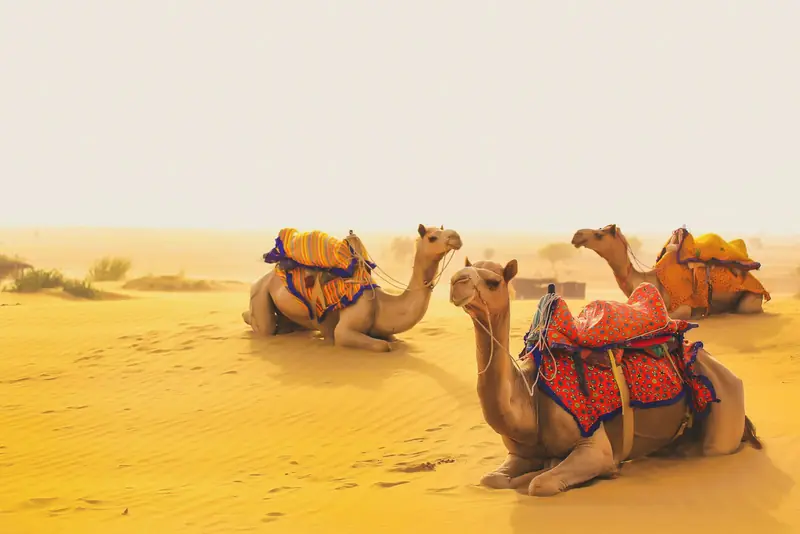
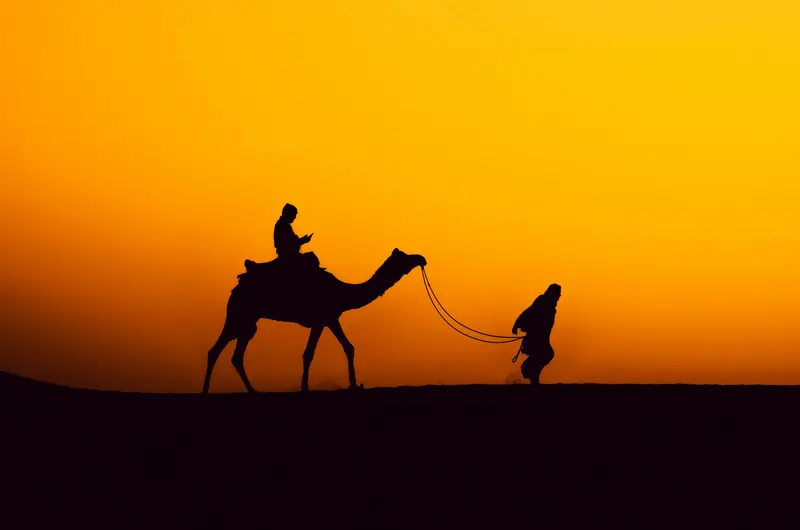
    The best-known dunes, about 40 km west of the town, with camel rides at sunset and desert camps. The Khuri dunes, further south, are usually quieter.

  • Kuldhara

    An abandoned village of the Paliwal Brahmins on the road to Sam, its stone houses left empty since the 19th century.

Suggested itinerary for Jaisalmer

  • Day 1

    Arrive and walk the fort with a guide: the palace, the Jain temples and the lanes inside the walls. Sunset from a rooftop or at Vyas Chhatri.

  • Day 2

    Gadisar Lake early, then Patwon ki Haveli and the old town. In the afternoon, drive to the dunes via Kuldhara for a camel ride at sunset and a night at a desert camp.

  • Day 3

    Sunrise in the desert, then continue to Jodhpur or Bikaner.

Planning your visit

How long to stay

Two nights is the minimum to see the fort and town and spend an evening in the desert; three nights gives you a full day in the town and a night at a desert camp without rushing.

Best time to visit

October to March. Days are warm and nights in the desert can be cold, especially from December to February. The Desert Festival is held each winter, usually in late January or February. From April to June, daytime temperatures are extreme, and many desert camps close.

Getting there

Most travellers arrive by road from Jodhpur, about 285 km away. Overnight trains connect Jaisalmer with Delhi and Jaipur, and the small airport has flights in some seasons only.

Combine it with

Jaisalmer is usually combined with Jodhpur, about five hours away by road, and Bikaner, about five to six hours. A classic western Rajasthan loop is Jaipur – Bikaner – Jaisalmer – Jodhpur, or the reverse.

Travel tips

  • The fort is a residential area: dress modestly, keep noise down in the lanes and ask before photographing people.
  • Desert camps vary a great deal. Ask what is included — dinner, the camel ride, transfers — before you book.
  • Bring a warm layer for the desert in winter; temperatures fall quickly after sunset.
  • Camel rides are short and slow. Wear trousers or a long skirt, and tell the handler if you are uncomfortable.

Opening hours, fees and seasonal conditions change. We confirm current details when we plan your trip.

Questions about Jaisalmer

How many days do you need in Jaisalmer?

Two nights is enough for the fort, the havelis and one evening in the desert. Three nights is better if you want to sleep at a desert camp.

How far are the sand dunes from Jaisalmer?

The Sam dunes are about 40 km west of the town, roughly an hour by car. Most visitors go in the afternoon for sunset and either return to town or stay at a camp.

Is Jaisalmer Fort still inhabited?

Yes. Several thousand people still live and work inside the walls, which makes it one of the few living forts in India.

Tours that include Jaisalmer

Private itineraries you can take as they are or change to suit you.

Plan your trip

Plan your visit to Jaisalmer

Tell us when you plan to travel, which places you want to explore, and what kind of experience you are looking for.

Plan My Trip