6 nights / 7 days
7 Days Exotic Rajasthan Tour
- Delhi
- Mandawa
- Bikaner
- Jaisalmer
- Jodhpur
- Jaipur
The desert side of Rajasthan: Shekhawati havelis, Bikaner, Jaisalmer's dunes, Jodhpur and Jaipur.
Price on request, quoted for your group
A desert trading city with one of Rajasthan's richest palace interiors.
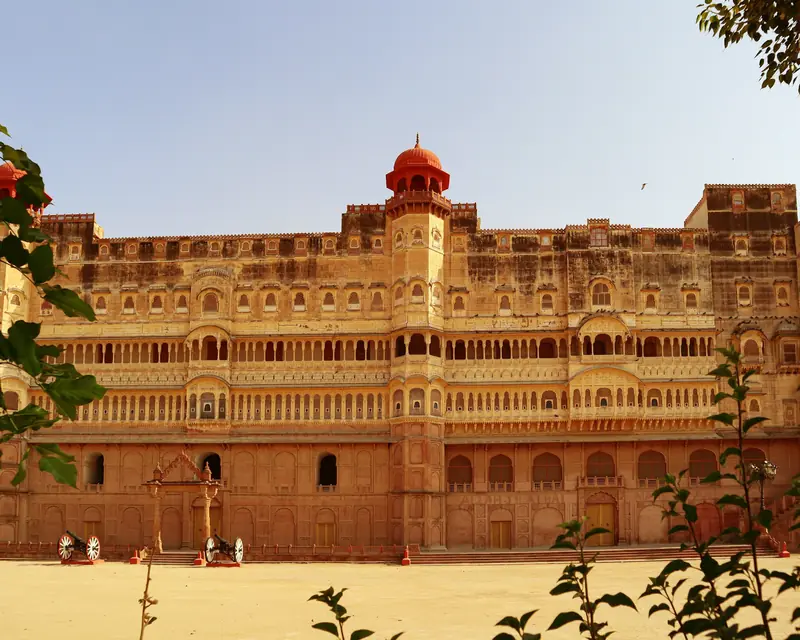
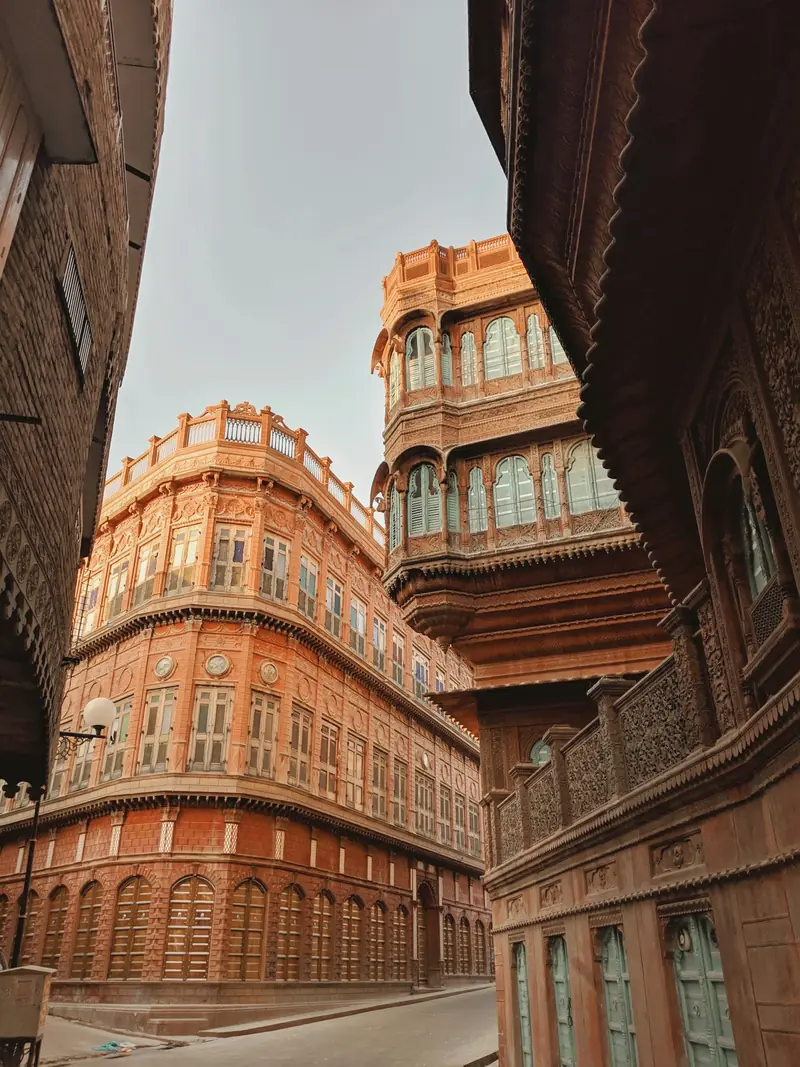
Bikaner was founded in 1488 by Rao Bika, a son of Rao Jodha, the founder of Jodhpur. It sits in the north of the Thar Desert and prospered on the caravan trade, which shows in its red sandstone merchant havelis and in Junagarh Fort, whose palace rooms are among the most richly decorated in Rajasthan.
Fewer tourists come here than to Jaipur or Jodhpur, so Bikaner feels more like an ordinary working city — a good place to see everyday Rajasthan between the bigger sights.
The main reason to visit is Junagarh Fort, built at ground level rather than on a hill, with painted, gilded and mirrored interiors. Around it are the havelis of the old city, the unusual Karni Mata Temple at Deshnok, and a government camel research farm. Bikaner is also famous across India for bhujia, a crisp savoury snack, and for its sweets.
Built between 1589 and 1594 by Raja Rai Singh, a general in Akbar's army. Its palaces, added over four centuries, include rooms covered in gold leaf, lacquer and painted clouds, and a museum of arms and royal objects.
A cluster of red sandstone mansions built by the Rampuria merchant family in the late 19th and early 20th centuries, mixing Rajput, Mughal and European details.
About 30 km south of Bikaner: a temple to the goddess Karni Mata where thousands of rats are protected and fed as sacred. Visitors remove their shoes, so take socks.
A palace built for Maharaja Ganga Singh in the early 20th century, now partly a hotel and museum.
A government camel breeding and research farm on the edge of the city, where you can see different breeds and try camel-milk products. It is usually open to visitors in the afternoon.
The lanes around Kote Gate for bhujia, sweets and everyday shopping.


Junagarh Fort, then the camel research centre in the late afternoon.
The Rampuria havelis and old city markets, then the Karni Mata Temple at Deshnok on the way south towards Jaisalmer or Jodhpur.
One night, or one full day, is enough for the main sights. Many travellers stop in Bikaner for a night between Mandawa or Delhi and Jaisalmer.
October to March. Summer temperatures are extreme, and the Bikaner Camel Festival is usually held in January.
Bikaner is about five to six hours by road from Jaipur and four to five hours from Jodhpur. Overnight trains run from Delhi, and the small airport has limited domestic flights.
Bikaner fits between the Shekhawati towns, such as Mandawa, and Jaisalmer, about five to six hours away by road. It also works on a Jodhpur – Jaisalmer – Bikaner – Jaipur loop.
Opening hours, fees and seasonal conditions change. We confirm current details when we plan your trip.
Yes, if you are travelling between Delhi or Jaipur and Jaisalmer. Junagarh Fort alone justifies the stop, and the city is much less crowded than Jaipur.
About 30 km, at Deshnok, on the road south towards Jodhpur. It is easy to visit on the way in or out of Bikaner.
Private itineraries you can take as they are or change to suit you.
6 nights / 7 days
The desert side of Rajasthan: Shekhawati havelis, Bikaner, Jaisalmer's dunes, Jodhpur and Jaipur.
Price on request, quoted for your group
Plan your trip
Tell us when you plan to travel, which places you want to explore, and what kind of experience you are looking for.
Plan My Trip