Ranthambore travel guide

Tigers, leopards and a ruined hill fort in the dry forest of eastern Rajasthan.

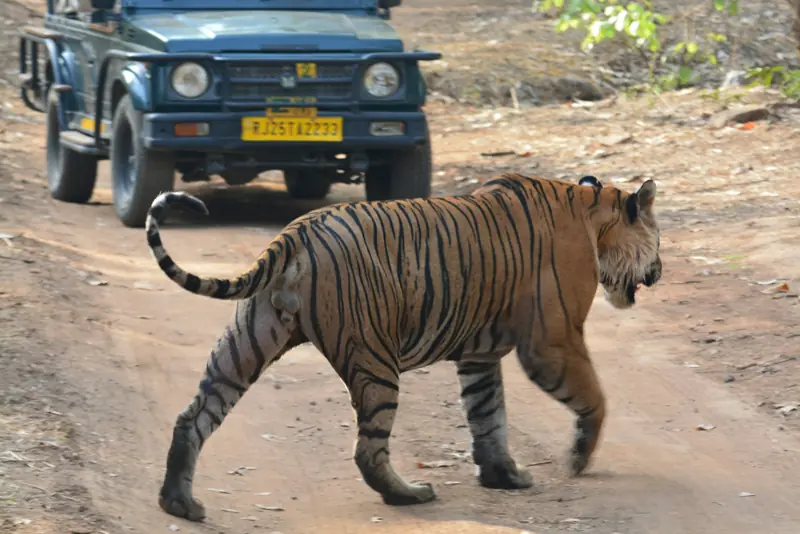
A tiger crossing a forest track in front of a safari jeep

Ranthambore National Park, near the town of Sawai Madhopur, is one of the best-known tiger reserves in India. Its dry deciduous forest, lakes and rocky ridges are overlooked by the walls of Ranthambore Fort, a Rajput stronghold more than a thousand years old.

The open forest makes it one of the better parks for seeing tigers, but nothing is guaranteed: wildlife is wild, and some safaris see no tigers at all. Leopards, sloth bears, sambar and spotted deer, crocodiles and more than 250 bird species also live in the reserve.

Why visit Ranthambore

Ranthambore is the most practical tiger reserve to add to a Golden Triangle or Rajasthan trip, as it lies between Jaipur and Agra on the main railway line. Even without a tiger, the landscape of old ruins, banyan trees and lakes is memorable, and the fort is worth a visit in its own right.

What to see in Ranthambore

  • Jeep and canter safaris

    Safaris run every morning and afternoon in open six-seat jeeps (gypsies) or 20-seat canters. Each vehicle is allocated a zone by the forest department and keeps to set tracks with a forest guide.

  • Ranthambore Fort

    A hill fort inside the park, part of the UNESCO-listed Hill Forts of Rajasthan, with gates, palaces, lakes and the Trinetra Ganesh Temple, which draws many pilgrims.

  • Padam Talao and the lakes

    The lakes near the old hunting lodge of Jogi Mahal, where tigers have often been seen in the dry months.

  • Village and craft visits

    Local villages and craft projects around Sawai Madhopur, which can be visited between safaris.

Suggested itinerary for Ranthambore

  • Day 1

    Travel from Jaipur or Agra by road or train and take an afternoon safari.

  • Day 2

    Morning safari, rest in the middle of the day, then a visit to Ranthambore Fort or a second safari.

  • Day 3

    A final morning safari before continuing your journey.

Planning your visit

How long to stay

Two nights with three or four safaris gives you a fair chance of good sightings. One night with two safaris is possible but leaves more to luck.

Best time to visit

The park season runs from October to June. October to March is the most comfortable; April to June is very hot but often good for sightings, as animals gather at the water. The main zones (1 to 5) close from July to September for the monsoon, when only some outer zones may stay open.

Getting there

Sawai Madhopur station is on the main Delhi–Mumbai line, with direct trains from Delhi, Jaipur and Agra. By road it is about three and a half to four hours from Jaipur. The nearest major airport is Jaipur.

Combine it with

Ranthambore fits between Jaipur and Agra, as in our Golden Triangle Tour with Ranthambore. It can also be paired with Bharatpur for a wildlife and birdwatching trip.

Travel tips

  • Safari permits are sold online by the Rajasthan forest department and sell out early in the busy months. We book them for you as soon as your dates are confirmed.
  • Zones are allocated by the department, not chosen freely, and some zones close on certain days. We check the current rules for your dates.
  • Wear muted colours, bring a warm layer for winter mornings and a scarf for the dust.
  • No tiger sighting can be guaranteed. Be wary of anyone who promises one.

Opening hours, fees and seasonal conditions change. We confirm current details when we plan your trip.

Questions about Ranthambore

Will we see a tiger in Ranthambore?

Many visitors do, but it cannot be guaranteed. Taking three or four safaris over two days gives you the best chance.

Jeep or canter: which is better?

Jeeps (gypsies) are smaller, quieter and more flexible, and are worth booking if available. Canters are larger shared vehicles and cost less.

When is Ranthambore closed?

The core zones close from July to September for the monsoon. The park also has some closure days during the season; we check the current rules when we book.

Tours that include Ranthambore

Private itineraries you can take as they are or change to suit you.

Plan your trip

Plan your visit to Ranthambore

Tell us when you plan to travel, which places you want to explore, and what kind of experience you are looking for.

Plan My Trip